We had nuclear power in Italy. From my house, I could see the cooling towers of the abandoned nuclear power plant in Trino [1] in the distance.
There was a referendum in November 1987 asking whether to abolish any form of nuclear power. It won with 80% of yes votes. This was a year after the Chernobyl disaster. Over the next few decades, Italy started to import electricity at a premium, mostly from its French neighbour, which has never stopped investing on nuclear and is today Europe's largest electricity exporter.
No politician dared touch this hot potato ever again for the following 24 years, until the June 2011 referendum, that asked whether to revive plans for nuclear power. It failed with 94% of No votes. This was 3 months after the Fukushima nuclear disaster.
I do not trust politicians, nor anti-nuclear activists, to ever do the right thing and drop their outdated stance on the matter.
I agree with you on all counts, it's especially sad that we're still basically bound to an irrational emotional response to Chernobyl.
Just a bit of context for non-Italians:
> It failed with 94% of No votes.
Referendums in Italy have weird rules. They may only be called to repeal existing laws. In this case, the then-standing Berlusconi IV cabinet had approved a new nuclear plan, and a referendum was called to abolish it. A referendum is successful if both the repeal votes are more and the turnout is more than 50%. So if you don't want to repeal the law, you just don't go to the polls at all.
This is just to say that when looking at Italian referendums the important number is not the Yes/No valid votes but the turnout, which in this case was 55% or something like that IIRC.
I'd agree that the public opinion is still anti-nuclear, but it's more 55-45 than 95-5.
>still basically bound to an irrational emotional response to Chernobyl.
It's hardly irrational. Nuclear power is effectively still uninsurable by private insurers and the taxpayer clean up bill for Fukushima is around $800 billion.
It wouldn't be irrational to build more power stations if they were cheap but nuclear power is even less economic than using wind and solar power to synthesize gas for storage and burning that to generate electricity:
Even taking that figure completely at face value, that's... not a lot of money?
Italy's GDP is 2.1T, if a Fukushima-like disaster happens once in 30 years (which it doesn't, but for the sake of argument let's say it does), that's an amortized cost of 1% of the GDP.
We're Italians, we'd waste that kind of money on some stupid shit anyway.
You mean you waste it on corruption (and the Mafia)? My family is Italian, and I do love the country, and it could be a true financial powerhouse...but the corruption will literally kill the country one day, I have very little doubt Italy as the current entity will fail (honestly I am surprised that covid didn't bankrupt the country, so that was a positive).
Italy has been slowly going down for the last 30 years. Too many small businesses that are not competitive, providing lower salaries; populism rose.
The State of Italy is spending ~30 billions each year for improving the insulation of old buildings, without lowering emissions significantly or having a real effect on the economy. With all the money that have already been spent just on this measure, Italy could have built so many nuclear reactors that it would have ensured zero carbon emission electricity for many years. That is just an example.
The cost of energy does not only depend on the cost of production: Denmark has a lot of cheap wind energy, but it costs almost three times more than in France. And the higher share of intermittent sources you have, the less valuable the production of energy can be, because it is sometimes produced when not needed, so you need to build up infrastructure, accumulators, etc.
The difference in electricity costs between France and Denmark (and pretty much any other such simplistic comparison you see) is often highly influenced by taxation policy.
You can tax energy use to encourage conservation or you can subsidize it via general taxes.
The wholesale electricity prices in Denmark and France are both directly in line with the EU average. Switch to consumer prices and Denmark becomes the maximum, and France drops below the average.
You can see a similar pattern with gas (both natural gas and gasoline) prices, they're roughly the same wholesale but Denmark's consumer prices are higher.
Is it Denmark really putting taxes on electricity so high that a kWh costs 2 times more than in France? Just to reduce consumption?
The interesting data you linked clearly shows the problem with high mix of renewables: even if the average wholesale price is the similar, the final cost can be way higher because people need electricity at 6 PM and not so much at 4 AM, and the costs of a more unstable system are higher (such as delivery costs). Similar production price, totally different value. That is the difference between LCOE and the costs estimates which include other factors, such as the firming intermittency price estimations published in Lazard 2023.
The similar patter you see in oil and gas could be because of taxes, but the difference is below 10 %, not 200 %.
The biggest difference is that Denmark built its wind farms a lot more recently than France built its nuclear power plants. The cheapest power plant is the one that is already built.
Nonetheless, I would expect France's electricity prices to rise significantly in the coming years as their 1970s plants all age out and decommissioning costs + the cost of brand new plants kicks in.
They have also publicly announced that they won't be replacing all of the nuke plants that will age out (presumably because of cost). So, the % of nuclear power on France's grid will decline with solar or wind or carbon producing fuels having to make up the difference.
France's total electricity production from nuclear is expected to rise, actually: the government, after abandoning the plan to have nuclear covering just 50 % of its electricity mix, removed the cap on the total nuclear power installed. In addition to that, almost all the existing reactors got their life extended (so up to 50 years of operating life), and the final aim is to reach 60 years. 6 new reactors have been approved, and another 8 could get approved. Basically, the whole President Holland's plan from 2014 on reducing nuclear has been dismantled.
Denmark's renewables are highly subsidized, construction is quick (which means short-term loans), so it should not impact so much on energy prices.
Finland has built the first-of-a-kind highly delayed EPR 3 reactor Olkiluoto 3, and the electricity prices felt sharply nonetheless.
I do not see the reason why decommissioning costs should make electricity more expensive in the future, because the owner has to pay and prove that the decommissioning will be done even if the company goes bankrupt (by allocating funds in advance or by providing an insurance).
This is not to say that a solution is better than the other: it is always a matter of finding a good energy mix for a network. France is investing in energy efficiency and renewables as well.
France went from choosing between new nukes and renewables (renewables were the obviously cheaper choice) to choosing between extending the life of the nukes it already has and renewables (no surprises, old nukes were cheaper). This doesn't contradict the suggestion that the high cost of new nukes is prohibitive when set against renewables.
>Italy started to import electricity at a premium, mostly from its French neighbor
Of course the French taxpayers now face decades of vast nuclear decommissioning costs. Italy doesn't. Rather as a country with lots of sun and many sparsely populated windy areas it can stock up on increasingly cheap renewables aided by possibly dirt cheap future battery prices. So you may be right, but equally maybe history will look quite favorably on Italy's energy choices. We will see.
If it's extremely safe we can let private insurers decide whether to shoulder the financial burden of a Fukushima style event and taxpayers no longer have to be on the hook for those pesky $1 trillion clean up events.
I'm all in favor of eliminating the act and adopting a wait and see approach to "will sophisticated insurers have an appetite for this risk?" but for some reason a lot of pro nuclear activists who are adamant that it is 110% safe aren't so sure about slashing this subsidy.
In any real case they should have both built out renewable energy and maintain and even expand the existing fleet of nuclear reactors. Nuclear might be historically expensive and storage an issue, but it is carbon free, and for the moment that is the most important problem we need to solve.
Additionally to what the sibling commenters say, we don't have a lot of sun nor wind in the Po Valley, where most of the industries are, and please point me to any G7 country that produces most of their energy from hydroelectricity, which Northern Italy has a decent potential for.
Renewables are just now starting to become economically viable, but distribution is still an unsolved problem. The wind farms in Sardinia are not gonna power Milan.
"[in Germany] in 2022, CO2 emission goals were exceeded by 40 million metric tons due to the increased use of coal-fired power plants resulting from the necessary cuts in natural gas consumption; estimates for 2023 assume 38 million metric tons.
The Emsland, Isar II and Neckarwestheim II nuclear power plants supplied a total of 32.7 billion kilowatt hours of low-emission electricity in 2022. German private households most recently consumed an average of 3190 kWh of electrical energy per year. This means that these three power plants can supply more than 10 million, or a quarter, of German households with electricity. The resulting reduction in the amount of electricity required from coal-fired power plants could save up to 30 million tons of CO2 per year."
Do please remember that amongst the reasons nuclear is expensive and slow is the weight of legal peril and delay intruded by .. the anti nuclear movement.
Not all, by any means but in the "it takes too long" side of things, there's a reason.
One of the reasons Germany is behind countries like Portugal in Wind power, is exactly the legal ways that anyone can prevent wind farms to be deployed, because "they are ugly", or "break the landscape view", or other nonsense.
Thankfully some states are finally voting on changing this.
Regulation also slows down green projects. There are reasons for these regulations and some of them will be around for thousands of years...
Green energy is cheaper, less risky and regulation (while also painful) is easier in most cases. As a result a project can be built much faster. Land usage is bigger but mixed usage is OK (e.g. solar over crops, parking lots etc.). Wind can reside in the sea and geothermal can be in the middle of the city.
I think the discussion over nuclear is based on data from a decade ago. The world changed. It isn't Greenpeace that should object, its the business interests. It just isn't viable anymore and the viability is declining, since solar/wind, storage etc. keep improving at an amazing rate.
From both an engineering sense and an aesthetic sense, I would much rather have 2 nuclear plants serving as base load (not total load) for 10M people, supplemented by solar/wind, than relying solely on solar/wind/storage. (In part because that requires an incredible amount of storage to preserve the current uptime in my part of the US, but also because it's a much better match to the load profile [engineering] and a smaller footprint near people [aesthetics].)
> It just isn't viable anymore and the viability is declining, since solar/wind, storage etc. keep improving at an amazing rate.
Yes renewables are growing at an amazing rate. But they don't cover countries' energy needs entirely, all the time. Which you need for a power grid.
The storage problem is by no means solved. And eg. hydro is only an option in a few places.
So you need other power generation to fill in the (big!) gaps.
Right now, that's a choice between a) let power grid go down, b) fossil, or c) nuclear. Note this is temporary! Only needed until sufficient storage comes online to let renewables do the job.
Given the urgency of the situation we're in, I see nuclear as the lesser evil here. And it's very annoying that NGOs like Greenpeace are actively blocking that escape hatch with their outdated stance. They should NOT get in the way of those working to reduce CO2 emissions. Even if nuclear.
At scale they do cover countries energy needs. Storage at grid scale is pretty great, are there enough batteries to replace all the current energy requirement?
No. But they can be manufactured much faster than setting up a nuclear plant.
If you have a combination of wind, solar, hydro and geo over enough of a distance then you can get continuous energy with very little reliance on storage. The main problem is that this only works at scale and some countries are smaller. For this we need marketplaces that sell energy between countries automatically. That isn't a hard problem on the technical level, but might be a political issue and a logistic issue (grid connections, security etc.).
Because of the urgency nuclear isn't viable. The same capacity *with storage* can be setup in less time than it takes to build a nuclear plant. It will be cheaper to boot. The economics of nuclear made sense a decade ago, not now.
Renewables industrialize much more land than nuclear and nuclear solve the challenge of renewables being dependent on the weather. Renewables are far more expensive than nuclear when the wind isn’t blowing and the sun isn’t shining.
Not accurate. Renewables can be multi-used. You can put them on agriculture lands, on buildings, on parking lots. You can put a wind turbines in the deep sea (where you have constant wind). Geothermal works all the time and you can put it in the middle of a city without disturbing anything.
When you have a large enough territory then you always have power from one or the other. Storage is enough to cover the rest and still keep the costs down.
Now tell me where you think the entire southeastern quarter of the US should deploy its wind farms, bearing in mind its periodic susceptibility to hurricanes along the coasts and offshore.
Geothermal? The largest geothermal plant in the world is the Geysers Geothermal Complex with a capacity of 900 megawatts. It is made up of 22 power plants and spread over several kilometers, located north of San Francisco. This is hardly something where "you can put it in the middle of a city without disturbing anything." Additionally, it sits on top of a deep magma chamber that spans over 30 square miles. If you don't have a thermal source quite as abundant and close to the surface, costs and losses rise dramatically. (For reference, Diablo Canyon in California has two 1,100MW reactors on a single plant that has already been producing CO2-free power for decades, and folks are still trying to take it down.)
Don't believe the hype. I'm firmly in the camp that global climate change is an existential crisis that we may already be too late to properly mitigate. This also means we're far too late to be discussing hypothetical solutions to the problem like geothermal and wind options that simply don't exist in large swaths of the US let alone the world.
It happens _all the damn time_ in winter and late fall. Anyone who doubts that is conjuring their own reality.
Poland had 2x larger share of renewables in July than in November.
There's barely any sun, wind increase isn't that significant to cover lack of it, and energy demand is very very high.
A reduction of only 2x between July and November is actually super positive for renewables. Wind and solar energy is almost free on an ongoing basis and installation of new capacity isn't expensive. Your number suggests that simply installing 2x the capacity needed in favorable weather would be sufficient for unfavorable weather. Actually it's more like 3x but that's still often very doable.
The researchers used past weather data (as you wrote), and looked at how that would work in a future (as I said) energy-mix scenario: a climate-neutral energy mix as projected for 2045.
So it definitely does not refer to the energy mix as currently installed.
Where did I claim anything about the currently installed energy mix?
I claimed that no wind and no sun happen very seldomly across Europe.
The aspect of the 2045 scenario is irrelevant here.
Btw. it's important to note that there are more renewable sources besides wind and sun: heat from the earth, water (e.g. rivers, tides), bio gas, ...
It's ridiculously uneconomic of course but a limited number will continue to be built in spite of this because of the overpowering military imperative.
If you have nuclear weapons/submarines/carriers/etc. like Russia or the United States or France it shares some of the gargantuan cost of building and maintaining them. I expect North Korea will get into it in the next few years too for precisely this reason.
Countries like Iran, Sweden and Korea, on the other hand, want to be able to manufacture a weapon on a tight deadline because of extremely self evident geopolitical fears.
Nobody else builds nuclear power plants. The vast power of the global hippy-industrial complex apparently prevented it :/
Of course, the western nuclear military industrial complex, who always HATED environmentalists with a seething passion, are aware of just how massively uneconomic it is but that doesn't stop them from trying to dress up as "young climate activists" to sell a form of power that is 5x more expensive as a green gamechanger. Consent for enormous subsidies needs to be manufactured somehow if nuclear power is to remain competitive with solar and wind.
Commercial reactors and military/medical isotope reactors are usually completely separated. The reason for that is that BWR/PWR reactors don't let you manipulate the fuel while the reactor is working, which makes it considerably harder to get plutonium.
China has reactors started in for example 2010 and 2015 that were finished in 5 or 6 years (and some others that took 10 years). India and Japan has reactors started in 2000 finished in 5-6 years. Pakistan has reactors stared in 2011 and 2016 finished in 6 years. Korea has reactors started in 2000, 2005, 2006, finished in 5 years.
Wind and solar have legal perils as well. Mostly NIMBYs, but some sincere concerns exist about impact on wildlife, loss of agricultural space, etc.
I think the reason the effects of those concerns in monetary terms pale in contrast to nuclear, is that nuclear technology is much more complex and complicated and therefore many more issues need to be addressed. At this stage, it's still a pretty immature technology and it can't progress very fast because it's considered more hazardous than alternatives.
As it is, I'm tempted to agree with the young climate activists if nuclear could short term buy us time to instantly shut down coal and gradually transition to renewable sources. Problem is, that even building "off the shelf" nuclear plants tends to take way longer than wind or solar.
True. The problem is that instant action is needed.
In that perspective, Germany's decision to shutdown operational nuclear plants in favour of ramping up brown coal energy seems especially poor. But had it's politics been different and the existing reactors kept open at expense of ditching coal, that still would not have helped advance nuclear innovation that might possibly have led to cheaper or safer nuclear power. As it stands, nuclear is too expensive to compete with renewables.
And I don't think the young climate activists would argue for leniency, building and managing nuclear plants with the same sloppiness as their coal competitors.
They can pack a nuclear power plant on a boat/submarine. It means, they can build a system which is compact and reproducible.
If the authorities would be ready to allow the use of such systems as stationary deployment and provide financial incentives to get them online fast for "base load", I expect Rolls Royce and cie. to quickly deliver.
Even a reactor designed to power an aircraft carrier wouldn't do much more than power a few suburbs. We would need many, many boat powerplants to replace a single coal fired power station which looks impractical against batteries and wind/solar both on cost and deployment speed.
I'm not here to try and float the nuclear boat, 'that ship has sailed' -but I think your economics are true now, but somewhat shallow.
There have been decades lost getting PV and wind viable to power a few suburbs and the LCOE of SMR would have been just fine if the industry had been allowed to achieve the same economies of scale of production. Now? It's two to three or more times expensive than solar/wind. (CSIRO)
Instead we've got billions of overspend on giant Reactor complexes like Hinckley. It can't compete. But undeniable huge sums of money have been flung at nuclear.
Both nuke, and solar and wind and batteries are dwarfed by the gross irresponsible subsidies which underpin coal, oil and gas. They launched the 20th century. They leave a trail of tears and ash behind, which will take centuries to remediate. Massive socialised losses as an externality.
I like wind, and PV and batteries. We're going to do fine.
I am not a grid expert, though I am fairly well versed in EVs/solar/battery storage.
I am curious if battery storage can be done on-site at solar/wind facilities rather than distributed locally in neighborhood grids. I ask, because in NY we are seeing huge NIMBY issues with installing battery storage in residential areas. A mix of realistic concerns (fire safety) and general FUD/NIMBYism for sure.
The facilities aren't even that big, which is why I'm curious if they could just be built out at the generation site and fight the NIMBY env. review paperwork game once.
For whatever reason, in the US they have been trying to do storage on the other end.
For example, on the roof top of a rent stabilized mid-rise rental building in Brooklyn. So of course it turns into a complete debacle of renters alleging landlord greed / callous indifferent / etc. And it forces politicians to take the side of the "little guy" against the big bad landlord and his green energy, haha.
Another example out in the exurbs, they were going to put a large battery storage install basically next to a highway off-ramp where they currently store plows/salt/trucks/etc. Unfortunately again the locals have raised a fit. Despite it being penned in on all sides by roads / state property, they are raising fear of fire hazards and environmental contamination.
Ideally we move to LFP batteries for storage and no longer need to hear all this.
Which has a huge effect on the speed of innovation, the cycle time is such that making a better nuclear system takes much longer than solar. So comparing costs gives one result, comparing cost curves quite another
My father pointed out an interesting counter to this to me recently: how many birds are killed by wind farms and how many are killed by house cats?
Studies show a million or so birds killed in the US by wind each year. Other studies estimate cats kill billions of birds- and most aren't eaten, because the cats are well fed pets.
> loss of agricultural space
Is that something we're short of? I'd argue that food prices, ignoring recent inflation fluctuations, are the cheapest they've been ever in the history of humanity. Hunger only exists in the world because capitalism dictates that those who are poor must starve.
The opposition to renewables is pure NIMBYism. Though I'd still back new nuclear any day (and my province recently announced some!)
Yes and no.
On the one hand, we destruct rain forests to have agricultural space. Bad of course.
On the other hand, we destroy the remaining nature by using pesticides to increase short term production.
Nevertheless, this wouldn't be necessary if the world would switch to plant based diets as much as possible
Why is the sourcing of nuclear fuel never talked about as a problem? France needs to maintain boots on the ground in Africa to protect their uranium mines. The German public, amongst others would be extremely against that level of direct imperialism.
    In France, although no domestic uranium exploration and mine development activities have been carried out since 1999, majority government-owned Orano (formerly Areva) and its subsidiaries remain active abroad.

    As of 2020, Orano S.A. has been working outside France, focusing on discovery of exploitable resources in Canada, Gabon, Kazakhstan, Mongolia, Namibia and Niger. In Canada, Kazakhstan and Niger, Orano is also involved in uranium mining operations.

    In addition, as a non-operator, Orano holds shares in several mining operations and research projects in different countries. In 2020, Orano started exploration in Uzbekistan.

    Total nondomestic exploration expenditures remained relatively steady from 2017 to 2018 at about USD 30 million per year, before declining by 17% to around USD 25 million in 2019 and 2020.

)
Also, I can't find any mention of the French having problems cooling down their reactors last year due to drying out rivers.
Nuclear might have been an option fifty years ago, but now it's too late to start, and we should focus on storage and renewables instead, if you ask me.
If you are doing a huge nuclear build out, you should also focus on storage. Nuclear plants are economic to run at peak all the time, even at night when the demand isn’t there. Renewables except reservoir based hydro have the same problem (the reservoir counts as storage for hydro, and anything else if you have can run pumps back up).
> France needs to maintain boots on the ground in Africa to protect their uranium mines
It seems rather coincidental to me that one of the countries where France has military presence happens to be a minor uranium producer (we're talking about Niger here I assume).
France has military presence in many more countries, and Niger is (or was, since there was a coup there recently) only a supplier for 1/5th of France's supply, and easy replaced with other sources. None of the other suppliers have French military bases.
Uranium is also very easy to stockpile since it takes little space, which makes it much easier to switch suppliers if needed.
Beyond the mere Uranium, power plants need specific fuel rods, and afaik only Russia is currently capable of manufacturing the fuel rods for the remaining old soviet bloc power plants in Eastern Europe.
A non-sanctioned country can buy uranium on the open market relatively easily. Production happens in many places [1], including Canada and Australia.
French power plants don't need to worry much about African politics, at worst they'll have pay Canada or Kazakstan a little extra for short notice delivery. And even then, Uranium is a small part of the overall cost of nuclear energy.
There are good reasons to reject nuclear power on purely historic analyses of the projected vs actual costs of nuclear projects[0]
It is very disheartening in Australia to listen to the Nimby objections to wind and solar farms in a country that is almost uniquely empty. I cannot imagine that objections to the location of nuclear power here would be any different.
> There are good reasons to reject nuclear power on purely historic analyses of the projected vs actual costs of nuclear projects
That is if you forget to factor in the lifespan of nuclear projects, which is easily 2-3 times longer than solar and wind, and doesn't require associated (not yet existing) massive storage.
(Not saying this for Australia specifically, there is no nuclear industry there whatsoever so any new project will have significant human resource obstacles on top of all others; just as a general point which is so often forgotten).
If people had been responsibly building nuclear 20 years ago the world would be better off today, but today ramping up storage and renewables seems like a better use of R&D investments and subsidies.
Nuclear and solar can each scale to ~40% of the annual supply for most grids without storage, but for different reasons they both need increasing amounts of storage as you ramp them past that point.
Solar because the sun doesn’t shine at night and peak consumption is mornings and evening, but Nuclear because demand varies though the day and season while the costs per kWh increase the more its capacity factor drops. France both had lower capacity factors and exchanged a great deal of power with its largely non nuclear neighbors. Exchanging power with less nuclear countries doesn’t scale to a worldwide increase in nuclear.
However nuclear also costs more per kWh as a baseline and runs into similar problems as the percentage of solar energy increases. Without storage, a 20% solar 30% nuclear grid is less profitable for nuclear than a 10% solar 30% nuclear grid. Given the long lifespans of nuclear power plants nobody wants to invest in nuclear if it’s expected to be unprofitable 20+ years from now.
> Nuclear and solar can each scale to ~40% of the annual supply for most grids without storage, but for different reasons they both need increasing amounts of storage as you ramp them past that point.
Is that actually true for nuclear? I did a brief search and it seems like in France at least, many reactors can adjust their power output at a rate of about 1% per minute[1], with some even as high as 5% per minute, which seems like plenty to me. You'll probably need some storage, sure, but a heck of lot less when you only need <10 minutes of backup power before the reactors can kick back on (compared to a grid based entirely on unreliable energy sources like solar and wind, for which you could have occasional dry periods of low generation lasting days or weeks).
The important bit here is capacity factor as someone is losing money when a nuclear reactor is sitting around not generating 100% power.
Globally the majority of nuclear reactors have a capacity factor of around 90-92% which means the vast majority of the time they’re getting paid something for generating electricity. France varied quite a bit but was generally below 80%.
Now that doesn’t sound that bad as their cost per kWh only went up by ~15%, but they where also exporting nuclear energy at a loss at night and the weekend to countries that didn’t use much nuclear. If every country tried to go 50+% nuclear then everyone would have a surplus on nights and weekends driving those capacity factors down even further and thus cost per kWh even higher.
France massively subsidized consumer’s electricity prices using taxpayer money, so it wasn’t that obvious to the consumer how expensive it was. However, it’s hard to justify such expenses when there are cheaper alternatives.
> someone is losing money when a nuclear reactor is sitting around not generating 100% power
Isn't that true of literally _every_ possible means of power generation though? Sure, there's an opportunity cost to not running your equipment at 100% 24/7, but only if there's enough demand to actually use that excess energy. You could argue solar and wind have it worse, since they don't even have the option to reduce output when it isn't needed (or ramp it up when it is, though it's a bit weird to think of cloudy days as an "opportunity cost").
Really though, we shouldn't _need_ to argue about which option is cheaper all things considered. Just remove as many regulatory barriers as possible and let the market sort it out. The only issue is that, as it stands, the regulatory barriers to nuclear are way higher than the regulatory barriers for wind and solar. (Governments are bending over backwards to accommodate the later, while in many cases effectively banning the former.) I'm just advocating for equal treatment.
On a level playing field without any regulation or subsidies, nuclear gets crushed.
> Isn’t that true of literally _every_ possible means of power generation though?
No, some peaking power plants get paid to sit around not generating power so they will be there for extreme events. They are paid not for power but for the possibility to generate power. This is viable because their operating costs when off are very low. Nobody can afford to employ 1000 people at a nuclear reactor so that someday the grid might want them to turn on for a few hours a year from now.
The operation vs standby costs of various types of energy generation vary wildly. It’s actually profitable for a natural gas turbine operator to install solar panels that only get used 1/2 the time simply to offset their natural gas fuel costs.
Actually, seeing solar panels installed at a fossil fuel power plant is however seriously trippy.
France built this hydro because it could not have moved from fossil fuels to 95% nuclear.
You can't realistically bring nuclear up and down in line with a daily demand curve. Hydro provides the peaking. Pumped hydro is better for this, since it provides both positive and negative balancing, but any hydro will do if there is sufficient storage.
If you have a good balance of nuclear and hydro, the nuclear will run close to full capacity and the hydro at less than half capacity, averaged over a day or longer. This is by design.
This is an article about progress being made towards, in some circumstances, being able to get around this problem. The implication is that in general, using standard techniques and technology, you can't do so, or it is very difficult, or incurs disproportionate costs.
> but for different reasons they both need increasing amounts of storage as you ramp them past that point.
Curious to know why nuclear would require storage. Having storage can make any production means more profitable, but there is no reason for nuclear to be non-viable without storage.
They are both technically possible, we could pay ~50c/kWh 24/7 for a 100% nuclear grid without storage in the same way we could build a global electric grid with power cables under the baring sea to use solar 24/7 without batteries. But realistically neither are viable without storage.
However, given the choice charging batteries via wind and solar just costs a lot less, thus why so few nuclear power plants are coming online each year.
> But realistically neither are viable without storage.
What do you call viable? Because there's a huge difference between the consequences for nuclear not having storage or peakers (a moderate price bump) and wind/solar not having it (basically, hours/days of blackout).
If I reversed the situation and said that wind turbines have as much of a waste problem as nuclear, you'd be outraged, because having to handle radioactive materials isn't comparable to polymers not being recyclable.
Something that might happen Aka Reasonably competitive with alternatives.
It’s physically possible to build infrastructure allowing 100’s of GW of solar electricity to move from Africa to South America across a single grid. But, there’s noway that is actually going to happen as it would be a horrific waste of resources vs local storage even ignoring political problems etc.
The same thing is true of Nuclear. There’s no way you’re going to see anything close to a 100% nuclear grid when adding hydro, batteries, wind, and or solar would drastically lower costs.
However, once you accept people aren’t going to do something that stupid you need to consider what mix of generation and storage is cheapest and how far from that we’re willing to go. That same logic is why nobody is every going to build days worth of battery storage, it’s simply cheaper to have extra capacity that mostly sits unused than extra storage.
> adding hydro, batteries, wind, and or solar would drastically lower costs.
What does "drastically" means? Fine tuning of the grid doesn't require hydro specifically, batteries are not actually used in any meaningful way in countries currently using nuclear, and the projected savings of having such tech aren't transformative: the intraday difference between peak use and low use in a typical winter day in France are about 20-25% [1]. Sure, shaving 25% off your bill is great, but typically it's significantly less than the difference in price between different European countries.
As for wind and solar, it doesn't really lower costs of nuclear as there's no correlation (wind) or a negative correlation (solar) with peak winter hours.
First for 100% nuclear you need to compare the difference between peak demand across decades + reserve capacity on top of that or you get brownouts when even just one power plant goes offline unexpectedly. The number you want to find is approximately 115% of the maximum demand in a single year, and now you need to build enough nuclear power plants to hit that or you’ll see brownouts. (I’m not looking for the highest demand for the year but in France Monday January 2 high 59GW, last week the low was 30 GW and the high 54 GW.) https://www.rte-france.com/en/eco2mix/electricity-consumptio...
Further, there are multiple kinds of nuclear power plants and different ways of operating them, if you want load following you pay a premium that increases as you need to ramp up and down ever faster, and another premium for increased thermal stress etc.
As to wind and solar, you don’t need to match peak production and demand when the energy is so cheap. The goal is cost optimization, if you “waste” 95% of the output from a solar farm over a year but that saves you a few million over doing something else then you build that farm. Further, the cheapest grid includes lots of hydro which is extremely flexible and some batteries. Wind and Solar alone aren’t that dependable but add even just 10% hydro to the mix and the economics look wildly different.
To be fair the economics also dramatically better for 90% nuclear 10% hydro vs 100% nuclear alone.
Summer numbers are irrelevant, because winter power draw is much higher.
> I’m not looking for the highest demand for the year but in France Monday January 2 high 59GW
Typical year might see 80GW in the winter. The record is north of 100GW, but that's something for which a country will import, restart decomissioned thermal plants and/or curb industrial consumers.
> Further, there are multiple kinds of nuclear power plants and different ways of operating them, if you want load following you pay a premium that increases as you need to ramp up and down ever faster, and another premium for increased thermal stress etc.
Yes, that's part of the issue. My point was, the constraint for storage is an economic optimization constraint. It's not in the same category as "tomorrow there's no wind so there's no power".
> As to wind and solar
I know the theory, my point is that wind/solar don't synergize with nuclear. There's a reason renewables proponents bash so hard against the baseload concept. If your renewables don't produce during peak hour, you have to build capacity ; that necessary capacity will see its load factor deteriorated because it then has to give way to renewables when they come online. The only way this is profitable is if you profit from not spending fuel - i.e. if your plants would have used gas.
> and doesn't require associated (not yet existing) massive storage.
That's not quite true. Nuclear generation is more flexible than wind and solar but much less flexible than thermal fuels, particularly gas. Although you can choose when you turn a nuclear power station on and off, you can't do so quickly, and your choices are somewhat constrained (regular downtime is required).
Nuclear worked well in the energy mix when it supplied base load (ie generate roughly the minimum daily load at all times) while coal supplied predictable peak load and gas could supply unexpected peaking. As this mix changes, availability patterns of nuclear start to be more of a burden. In a system without fossil fuels, you would have to have (some) energy storage, regardless of the split between nuclear, solar and wind.
The exact number for how much storage, how much overcapacity, or how much natural gas generation you would need vary with the proportions of solar, wind and nuclear of course, but it's an oversimplification to suggest that they are trivial if you use mainly nuclear.
To simplify without oversimplifying: Modern nuclear plants can change between 30% and 100% of nameplate capacity within half an hour, and that's how they operate in France for instance. While coal plants might rev up from 75% to 100% in a twice-daily shift change, but are clearly not set up to run at minimal loads.
The lifespan is included in these calculations already.
This actually favours nuclear since they generally assume that a nuclear plant will be able to sell all its produced energy over many decades, even as solar is predicted to be cheaper than just their running costs for much of that time period.
> lifespan of nuclear projects, which is easily 2-3 times longer than solar and wind
Not sure it is a really solid argument. For wind maybe yes, but life expectancy of solar panels is about 40 years (warranty are 25-30 years but are pessimistic with margins). And with very low maintenance during the lifespan and easy replacement.
Nuclear reactors have 60 years lifespan yes, but with massive continuous maintenance during the life cycle.
I'm sorry but the lifespan of the power plant is irrelevant.
LCoE is measured in dollars per MWh. If your powerplant is projected to go from $55/MWh to $110/MWh no amount of lifespan doubling is going to change that.
It's not irrelevant. The cost to construct the nuclear power plant is very high, and is the main part of the price, and if it's amortised over 20 years, the cost of MWh produced is higher than if it's amortised over a more realistic 50 or 70 years.
Locking up capital for 70 to 80 years? Do you know about the time value of money? [1] What you are proposing is FDR and Churchill sitting at the Casablanca Conference at the height of the second world war in 1943 [2] planning out economic investments that will be returned in 2023. Does that sound reasonable?
Likewise, a renewable plant that makes the money back in ~25 years allows the investor to reconsider the investment decision and better optimize the capital allocation two times while the ones building nuclear are still paying for the nuclear plant. The renewable owner could after 50 years decide to invest in nuclear. I wonder which is more efficient?
I was at a dinner with people who were at the Franklin Dam protests. I remarked off hand that in hindsight it would have enabled a great pumped hydro opportunity for Tasmania. The looks were intense.
There's a certain pragmatism that we need to adopt as we hurtle into the middle of the climate crisis. Seeing a lot of wind Tubines and solar panels on the landscape is a small sacrifice that we should be willing to pay. And it's not like they make the land unusable. Live stock don't mind turbine, and love to graze in the shade of solar panels.
You're conveniently omitting that a lot of these costs are driven by onerous regulations and delays put in place by the same anti-nuclear activists. You can't simultaneously lobby for bloating the costs and then use those bloated costs as evidence against nuclear's effectiveness.
Shocking that this article is originally from the Guardian https://www.theguardian.com/environment/2023/aug/29/young-cl... and they either didn't find out or didn't care to mention that as well as being a 'young climate activist' she works for a nuclear-industry-funded pressure group.
Do you have proof that she gain money or benefits because of its involvement in such group, and/or that that group is funded by the nuclear industry, as you said? I found no information about that, just a generic and vague "partners" page.
> It was co-founded by the ENS, the French Nuclear Society (SFEN) and the American Nuclear Society (ANS) in 2015.
They say that on that page. So at that point, it's on them to make clear if they've created a seperate and independent org that can actually live up to the obviously false from the start claim of being "grassroots". As far as I can tell this is just a project run by those nuclear industry orgs, not an independent charity so all funding is entirely opaque, and asking for donations is just a front.
But someone is paying to get that team of about thirty to every global COP gathering so they can "flash mob" and paying to producing the multiple slightly too glossy websites and get them in all the papers.
Just the time off from their employers in the nuclear industry must add up.
Thanks for pointing it out. The website is rather opaque with respect to funding.
It looks that both associations are non-profits, with a lot of students, scientists, professors and professionals. This does not seem incompatible with their grassroots claims, but they really need to clarify funding and expenses of this new group.
This does not invalidate IPCC or JRC reports on nuclear power, nor the scientific papers, or the fact that there are various pro-nuclear environmental movements and political parties that are transparent about their funding and relations. Nuclear is more popular between younger people that are more worried about climate change than the effects of Chernobyl nowadays.
I followed RePlant before, when they talked about "future of food" topics, and knew that most involved persons were really early-stage scientists, so I thought that this was truly grassroots.
To add: Not that it's wrong to work for a lobbying organization while having vested interests because of one's employer, but transparency goes a long way here.
This is maybe the impatience of youth running up against the false certaintly of middle age.
I think the reality is that both sides have good points. Nuclear looks like the only way to create enough energy density to power modern societies. On the other hand, build times for current mainstream nuclear plants are too long given the critical situation we're in, and we still dont have widely deployable solutions to the waste problem.
So, following your argument, we should at least continue to run existing infrastructure?
I wonder why these debates only focus on problems such as waste, catastrophic risk or investment/financing, but not sourcing of uranium, which might not be available from "friendly countries".
> So, following your argument, we should at least continue to run existing infrastructure?
Qualified yes. I personally don't see how we can make it through the critical coming decades without nuclear, but that implies we'll continue to create nuclear waste. The only solution we have is to deep burial. While I think thats fairly safe, the only operational facilitiy is Onkalo in Finland. We're going to need to build more, and deep excavation takes a lot of time and safe sites are limited. Not every country that will want to deploy nuclear power will have a way to dispose of the waste.
The other alternatives are shoot it into the sun (too dangerous at scale) or shallow storage (dereliction of duty of future generations).
So I dunno really.
As for uranium resources, theres a lot in Australia.
I later looked up the resources on Wikipedia which also listed Canada as having significant mining capacity. So maybe that argument is not strong either.
Public opinion will swing back in favor of nuclear power as more and more people grow up without having known the disasters that were Three Mile Island and Chernobyl first hand.
Kids these days don't give a shit about Chernobyl - And Fukushima was already more than a decade ago. Most 30 somethings are most likely not even aware of the Harrisburg accident.
What they do know is that their apartments are smaller than their parents were when they were their age. They can't afford to drive cars like their parents did and they can barely afford to pay the electric bills in the winter.
At the same time they are well informed about the causes of climate change, an enormous release of green house gasses into the atmosphere, to power the economy. So what else is there to feed the economy with energy? Wind & Solar? Get real. The obvious solution is to run those electric generators using steam turbines fueled by uranium.
I'm in Canada and we use CANDU reactors their technology is amazing it came about out of necessity due to a young nation with few resources. The fuel is natural uranium not plutonium. I think it's the best design, it can even use thorium which I think India uses (they're tripping over it there).
It's not really a competition. Ramping up nuclear will not make fossil fuel burning go away. You just have two sets of problems.
Both industries have a track record of allowing "can't happen" events to happen. Oil & gas gave us climate change disasters, Deepwater Horizon, Exxon Valdez, and so on. Nuclear power gave us Chernobyl, Fukushima, and a bunch of other incidents that pale in comparison.
Big oil took control of their political situation. Nuclear power never did. So we get political hyperfocus on the risks of transporting nuclear waste while tanker trucks are exploding on a daily basis.
Hydropower has limited opportunities and known costs. The other shoe has not yet dropped on what happens with a massive scale-up of other energy sources like wind, solar, maybe fusion...
Same reason I have issues with the Uk Green party, makes them look foolish when they push to stop fossils but the only current practical solution is nuclear(which they're against)
Solar, wind, and tide are very dispersed forms of energy, so harvesting them on a significant scale has a massive environmental impact. Also there are issues relating to extracting the input materials, and to waste disposal after the devices are retired. It's not clear to me that "green" energies are any better than fossil fuels.
But we will need baseload power for a long time to come. The UK is not investing in battery technology and on still winter days the UK needs to be able to spin up a lot of power generation quickly. That role is currently filled by natural gas. Nuclear should have taken its place.
Nuclear can't do peak load scaling and is less consistent than you might think for baseload.
You might benefit from looking at systems like Compressed Air Energy Storage. Highly responsive, compatible with CHP, virtually no scarce materials involved, and pairs dramatically well with renewables.
As an additional bonus, it also doesn't leave vast tracts of land uninhabitable if it goes wrong.
I consider myself very much an ecologist, and also struggle to understand anti-nuclear ecologists. However there is one anti argument that I think is worth sharing, one friend exposed to me and that I think it is very pertinent: "One should be against nuclear energy because their lobbies encourage a society where energy is not limited. Having clean and (relatively) cheap energy is not the best way to go toward sobriety. And it is easy to confuse having a carbon-free energy source with having a new way to produce more cars, planes, phones, content, etc... which will only help capitalism to grow stronger"
I think there is a big part of truth here, and we (the pro-nuclear ecologist) must address an answer to this worry. My opinion is that we should separate this in two fights: (i) we must go for a more sustainable society by reducing our needs in energy and our general consumption; but it is irrational to think we will ever reduce our energy consumption level to a level sufficiently low that nuclear would not be the best option, hence (ii) we must keep learning how to build and maintain nuclear plants.
(1) When a resource is unlimited, it's easier to distribute that resource cheaply to everyone, which is exactly what communism strives for. Resource scarcity leads to power being concentrated in a small ownership class - e.g. capitalism.
(2) Why think "more cars, planes, phones, content, etc" are unique to capitalism? People want to travel and to be entertained, regardless of the economic system they live in. Communism doesn't mean people will suddenly want fewer material goods.
This is a caricature of the anti-nuclear position. Renewables also offer the potential of a society where energy is not limited, why aren't communists also opposed to those?
I agree the stance is old-fashioned, but nuclear is not the solution in 2023. We correctly attempted it in the 2000s, it did not deliver, lets learn from that experience. Who would finance another Flamanville [1] or Vogtle [2] today?
The research is clear, every cent invested in nuclear power prolongs the climate crisis. [3]
> On both costs and speed, renewable energy sources beat nuclear. Every euro invested in new nuclear plants thus delays decarbonization compared to investments in renewable power. In a decarbonizing world, delays increase CO2 emissions.
The recently nationalized debt laden French nuclear behemoth EDF can not even finance new nuclear plants without direct state aid. [4]
> (Montel) French utility EDF is unable to self-finance the construction of new nuclear reactors due to its EUR 65bn debt and so needs state funding, CEO Luc Remont told a hearing of France’s lower house on Wednesday.
Meanwhile Germany are raking in tens of billions by simply selling the right to build off-shore wind. [5]
> Germany’s first dynamic bidding process, covering four offshore wind zones with a combined capacity of 7 GW, has generated EUR 12.6 billion in proceeds, according to the Federal Network Agency.
> With the award, the successful bidders are entitled to the implementation of a planning approval procedure for the construction and operation of wind turbines on the site as well as the right to connection and grid connection capacity, the agency said.
So how much will that grid connection cost?
It would be great if these auctions were “clean”, in the sense that no taxpayer money would be needed to build these offshore wind farms. But I doubt that is the case.
In Sweden the grid connection for off-shore wind farms have been said to be in the 15-30% range of total cost.
On the other hand, the question is where the grid ends and a power plant begins. Previously when the grid owners and power generators were the the same utility the question did not matter, grids were built to accommodate the locations of nuclear plants.
Countries have gone in different directions on this. In the UK the off-shore wind farm builders are responsible for their grid connections while in Germany, Denmark and the Netherlands the grid operator pays for it.


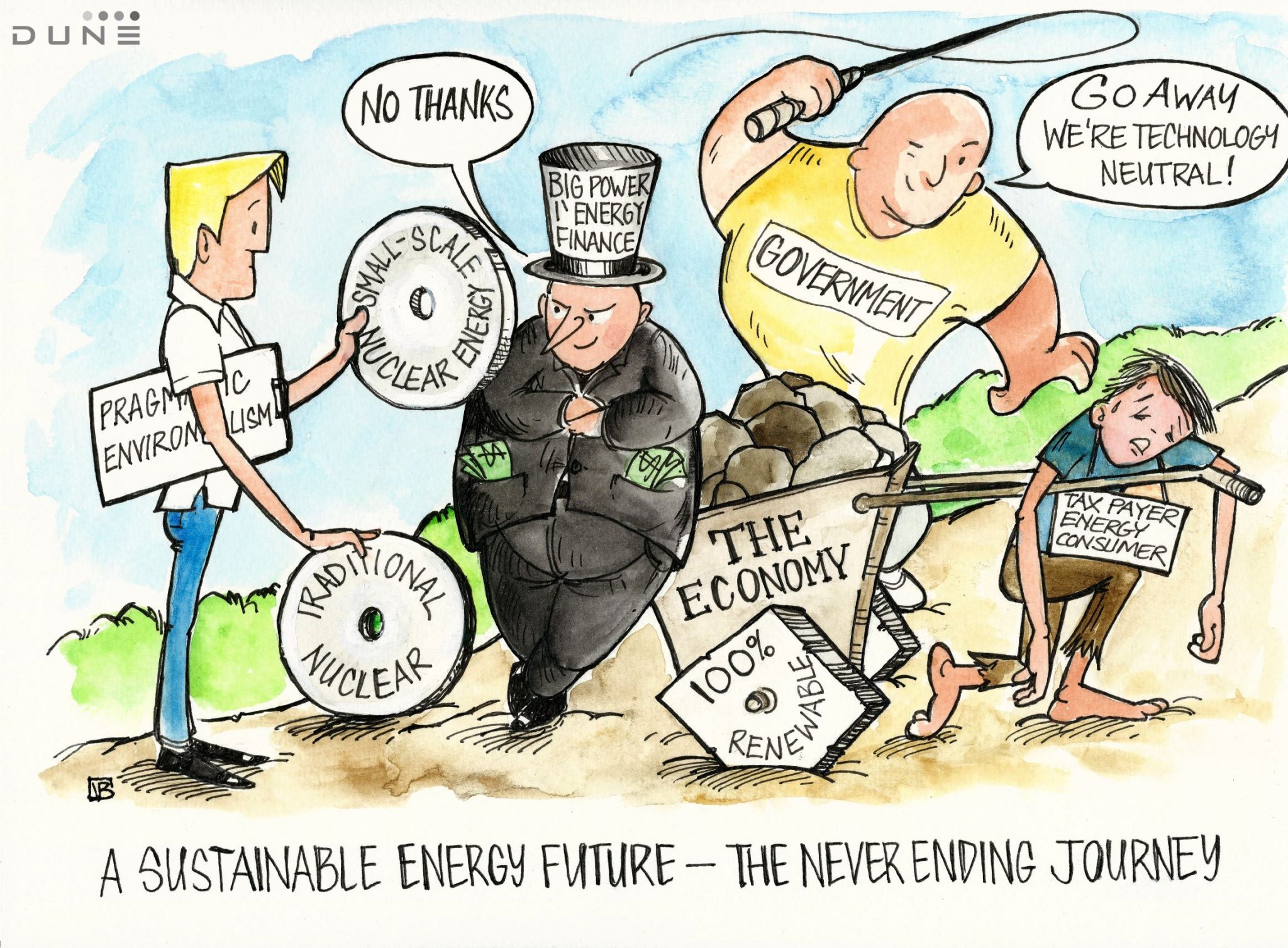
There was a referendum in November 1987 asking whether to abolish any form of nuclear power. It won with 80% of yes votes. This was a year after the Chernobyl disaster. Over the next few decades, Italy started to import electricity at a premium, mostly from its French neighbour, which has never stopped investing on nuclear and is today Europe's largest electricity exporter.
No politician dared touch this hot potato ever again for the following 24 years, until the June 2011 referendum, that asked whether to revive plans for nuclear power. It failed with 94% of No votes. This was 3 months after the Fukushima nuclear disaster.
I do not trust politicians, nor anti-nuclear activists, to ever do the right thing and drop their outdated stance on the matter.
--
1: https://en.wikipedia.org/wiki/Enrico_Fermi_Nuclear_Power_Pla...